パワーエレクトロニックシステム研究室 Power Electronic System Laboratory

研究室紹介(日本語)
研究内容
学外発表・受賞
アクセス・お問い合わせ
Introduction (English)
  • 研究室紹介(日本語)
  • 研究内容
  • 学外発表・受賞
  • アクセス・お問い合わせ
  • Introduction(English)
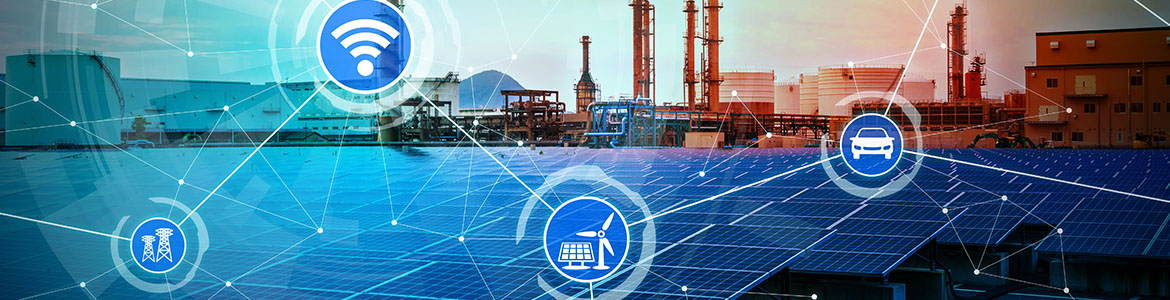
The Power Electronic Systems (PELS) Laboratory has a comprehensive research policy on the broad topic of power electronics and power systems. In particular, we are aiming for applications in the areas of sustainable, renewable energy-derived distributed power sources, high-precision data analysis, and earth-friendly mobility for future zero-emissions.
Introduction (English)

The Power Electronic Systems (PELS) Laboratory has a comprehensive research policy on the broad topic of power electronics and power systems. In particular, we are aiming for applications in the areas of sustainable, renewable energy-derived distributed power sources, high-precision data analysis, and earth-friendly mobility for future zero-emissions.

【Faculty】

Yuko Hirase, Ph. D.
Professor
Program of Electrical and Electronic Engineering, School of Engineering
Technical Committee Member of Electricity and Gas Market Surveillance Commission, Ministry of Economy, Trade and Industry
【Career Summary】
Ph.D. in Engineering, March 2016, Osaka University, Suita, Osaka, Japan
M.A in Engineering, March 1996, Osaka Prefecture University, Sakai, Osaka, Japan
B.A in Science, March 1995, National Institution for Academic Degrees, Tokyo, Japan
Before the current position, she worked for Mitsubishi Electric Corporation, Hitachi Maxell, Ltd. and Kawasaki Technology Co., Ltd
From 2019 to 2025, she was an associate professor at Toyo University.
From 2025, she is currently a professor at Kwansei Gakuin University.
【Academic Affiliations】
IEEJ (The Institute of Electrical Engineers of Japan)
JIPE (The Japan Institute of Power Electronics)
IEEE
CIGRE

【Research Thrusts】

1.
Research on Next-Generation Grid-Connected Inverter Control Methods such as Virtual Synchronous Generator (VSG) Control

 Virtual Synchronous Generator (VSG) control is one of the grid-forming (GFM) inverter control strategies and contributes to maintaining a resilient power system even under disturbances such as natural disasters or severe faults. In recent years, VSG and its derivative GFM-based technologies have been increasingly introduced into next-generation power systems, making a fundamental understanding of their dynamic characteristics and stability mechanisms essential.

2. Research on Power System Stabilization Methods Using Artificial Intelligence (AI)
 
In modern power systems, new energy resources—particularly renewable energy sources—are being connected in a distributed manner, and the operating and shutdown schedules of individual distributed generators differ from one another. To maintain stability in such dynamically changing power systems, it is necessary to comprehensively analyze system stability under all conceivable operating conditions. However, reproducing an enormous number of operating scenarios individually and analyzing them manually is inherently limited in feasibility and efficiency.

 
In our laboratory, artificial intelligence (AI) is employed to predict system stability across diverse operating conditions based on a limited set of acquired training data. From these predictions, a comprehensive stability map is constructed. By utilizing this stability map for operational decision-making and control design, the research aims to establish rational and robust methodologies for the stable operation of highly variable next-generation power systems.

3. Advancement of Impedance-Based Data-Driven Power System Stability Analysis and Control Technologies
 
Modern power systems integrate a wide variety of power sources and loads manufactured by different vendors. While these devices are becoming increasingly sophisticated and enhance user convenience, accurately representing their internal dynamics with explicit mathematical equations is becoming progressively more challenging.
 Impedance-based power system analysis differs from conventional state-space modeling, in which the entire system is formulated as a unified set of equations. Instead, subsystems are modeled individually as impedances, and the overall system stability is evaluated by interconnecting these impedance models. Although impedance models can be derived analytically, they can also be obtained through measurement when internal device information is unavailable or when subsystems are large-scale and highly nonlinear, making analytical modeling impractical. In this manner, system characteristics can be evaluated directly from measured data, making impedance-based analysis particularly effective as a data-driven approach for increasingly complex modern power systems.
 
In our laboratory, dedicated measurement equipment has been developed to enable practical impedance modeling. By integrating data-driven impedance models with analytical mathematical models, advanced methodologies for power system analysis and stabilization are being established.

4. Advancement of Grid-Connection Technologies for Doubly-Fed Induction Generators (DFIGs) Toward a Zero-Emission Society
 
The Doubly-Fed Induction Generator (DFIG) is a variable-speed generator widely used in wind power generation and pumped-storage systems. It is one of the few rotating electrical machines capable of directly interfacing renewable energy sources with the power grid. By enabling operation both above synchronous speed (super-synchronous operation) and below synchronous speed (sub-synchronous operation), high-efficiency power generation can be achieved over a wide speed range.

 
Our laboratory is equipped with a 10 kVA-class DFIG experimental system originally transferred from the former Ise Laboratory at Osaka University. For a university laboratory, this represents a relatively large-capacity facility, allowing full-scale experimental verification of variable-speed control strategies and grid-connected stability at the hardware level. Utilizing this platform, research is conducted from both theoretical and experimental perspectives to advance power system technologies aimed at realizing a zero-emission society.

5. Research on Safe, Reliable, and High-Efficiency Energy Management Systems (EMS)
 
In customer-side distribution networks such as campus power systems, distributed energy resources—including photovoltaic generation, wind power, and battery storage—are increasingly interconnected. As output fluctuations and operating conditions become more diverse, system operation is growing in complexity and sophistication. In our laboratory, an Energy Management System (EMS) is developed to integratively control advanced power conversion systems and distributed energy resources. The research focuses on enhancing optimal operation methodologies that simultaneously consider power balance, equipment constraints, voltage stability, and overall efficiency.

 
In addition, establishing resilient operational strategies capable of sustaining power supply during large-scale outages or natural disasters constitutes a major research objective. Through EMS design incorporating seamless transition control to islanded operation and strategic utilization of battery storage systems, the goal is to realize next-generation energy systems that achieve both high-efficiency operation under normal conditions and safety and reliability under emergency conditions.

6. Other (Flying Capacitor Control,Solar Power Generation Control,etc.)

Major Employers

Tokyo Electric Power Company Holdings (TEPCO Holdings), J-POWER, Daiichi Techno,
Shimizu Corporation, Taisei Corporation, Oji Holdings,
Internet Initiative Japan (IIJ),
TMEIC, Fuji Electric, Yokogawa Electric Corporation, National Tax Agency,
and others

Awards
Publications
Contacts
パワーエレクトロニックシステム研究室 Power Electronic System Laboratory

研究室紹介(日本語)   研究内容   学外発表・受賞  アクセス・お問い合わせ   Introduction(English)


+
Ver. 2.77
close
Title
保存
Ver. 2.77
close
Title
変更
表示調整

Ver. 2.77
close
Title
保存
復元
Ver. 2.77
close
Title


Login

© パワーエレクトロニックシステム研究室. All Rights Reserved.

  • 研究室紹介(日本語)
  • 研究内容
  • 学外発表・受賞
  • アクセス・お問い合わせ
  • Introduction(English)